

What to Eat for Energy in the Postpartum Fog (From an RD Who's Been There)
I have a nutrition degree. I've helped hundreds of clients build healthy habits. And in the first few months after my first baby was born, I still found myself standing in front of the fridge at 2pm, starving – there were lots of ingredients, but nothing ready to eat.
If you're in it right now – running on coffee, adrenaline, and whatever food is within reach – I want you to know two things.
First, you're not doing it wrong.
Second, there's a lot you can do to feel less depleted, even in the middle of the chaos. And none of it requires a meal plan you don't have time for.
Why postpartum fatigue isn't just about sleep
We talk about postpartum exhaustion like it's purely a sleep problem, and sure – sleep is a huge piece of it. But there's a nutrition side that gets almost no airtime.
Your body just did an enormous amount of physical work. And it's still working – healing, recovering, and if you're breastfeeding, producing milk on top of everything else. That takes real energy and real nutrients.
Add in irregular eating (skipped meals, snacking standing up, going hours without food) and you get blood sugar swings that make fatigue worse, not better. Many new moms are also depleted of vital nutrients like iron after birth, which compounds the tiredness in a way that coffee can't fix.
None of this means you need to overhaul your diet in the middle of survival mode. It just means what and when you eat can either help steady your energy or make the crash worse. And thankfully, small shifts go a long way.

What actually helped me (and helps my clients)
Here's what made a real difference, without requiring meal prep I didn't have the bandwidth for:
1. Protein at every eating window, not just meals.
I stopped thinking of protein as a "meal" thing and started keeping it within arm's reach all day – hard-boiled eggs, string cheese, Greek yogurt, my favorite protein bars in the nightstand. Protein keeps blood sugar (and energy) steadier than reaching for straight carbs when you're running on empty.
2. Keeping 3-4 "no-prep" staples stocked at all times.
For me it was rotisserie chicken, fresh fruit, cheese, and good bread. When I was too tired to think, I didn't have to -- I just grabbed from that list.
3. Eating before I felt starving.
Waiting until I was ravenous almost always meant I'd grab whatever was fastest and least satisfying. Even a small, balanced snack every few hours kept me steadier than the three "real" meals I kept skipping anyway.
4. Water within reach, always.
This sounds too simple to matter, but dehydration mimics fatigue almost exactly, and if you're breastfeeding your fluid needs go up. I started keeping a water bottle wherever I fed the baby, since that was the one place I was guaranteed to sit still for a few minutes.
5. Letting go of "balanced plate" pressure.
A postpartum meal doesn't need to look pretty or perfectly balanced. A handful of nuts and a piece of fruit is a completely legitimate lunch some days. Something is almost always better than the nothing you'd otherwise settle for.
Foods that fight the fatigue (save this list)
If you only remember one section of this post, let it be this one – these are easy to keep on hand and actually move the needle on energy:
Eggs– quick protein, endlessly versatile, good even cold
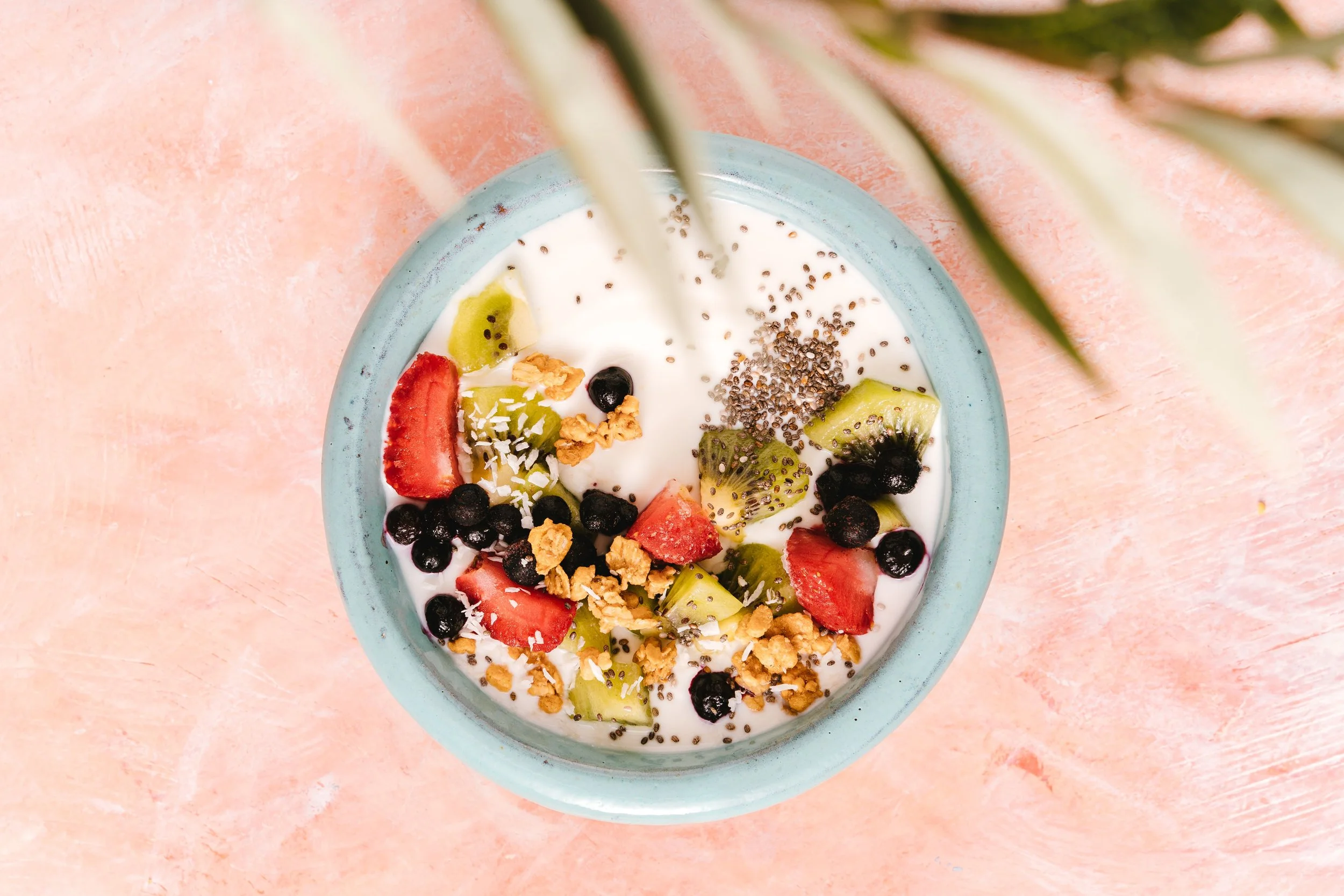
Greek yogurt – protein + a little fat, keeps you fuller longer than regular yogurt
Drinkable yogurt – even easier than Greek yogurt, still satisfying
Nut butter + fruit– fast, satisfying, minimal cleanup
Trail mix or nuts– the ultimate one-handed snack
Roasted chickpeas or edamame – salty crunch, protein + fiber
Overnight oats – make once, grab all week (or store bought options like Seven Sundays Protein Oats or MUSH)
Cheese + crackers – protein, fiber, and salt (which you're likely losing more of than usual)
Berries– antioxidants, fiber, minimal prep
(If you've grabbed my free snack guide, several of these will look familiar – it's built around exactly this kind of grab-and-go thinking.)
When it's more than "just tired"
Not all postpartum fatigue is fixed by food and water, and it shouldn't have to be.
If you're feeling exhausted in a way that doesn't improve with rest, food, and time – or if it's paired with mood changes, anxiety, or just not feeling like yourself – please talk to your provider.
Postpartum thyroid issues, anemia, and postpartum mood disorders are common, treatable, and not something you need to push through on willpower. Nutrition can support your energy, but it's not a substitute for medical care when something more is going on.
I learned this myself while navigating postpartum anxiety alongside the exhaustion – food helped, but it wasn't the whole answer. Getting extra support mattered too.
You don't have to figure this out alone
It took me a while to land on what actually worked for my body postpartum (and several more adjustments since then) – even with a nutrition background, even having supported other moms through this exact stage for years.
I don't say that to be discouraging. I say it because if it took me a minute to figure out, it's not a reflection of you doing something wrong. It's just genuinely hard, and most of us are doing it without much real support.
If you're in the thick of it and want a plan built around your actual life – not a generic postpartum diet – I'd love to help. Book a free discovery call and let's talk about where you're at.